The Complete Guide to Ugandan Coffee Farming: From Volcanic Soil to Premium Arabica Beans
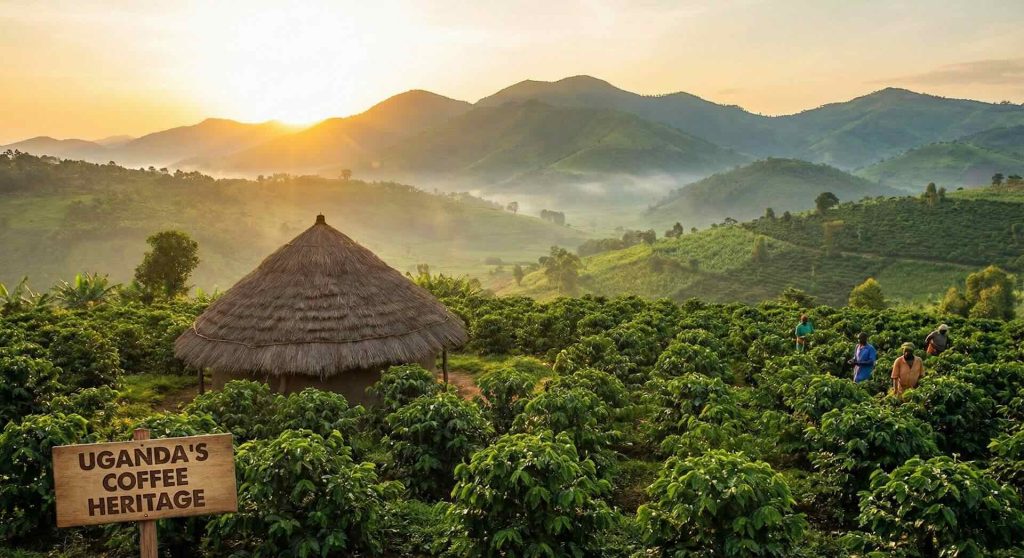
Why Uganda? Uganda naturally produces some of the world’s finest Arabica coffee, grown exclusively in the nutrient-rich, volcanic soils of the Rwenzori Mountains at soaring altitudes between 1,200 and 2,300 meters. This comprehensive guide lifts the curtain, revealing the exact, meticulous farming process that transforms raw coffee cherries into the premium green beans that B2B buyers actively seek.
🌱 Stage 1: Planting & Cultivation (Months 1-36)
Seedling Preparation (Months 1-12)
Nursery Stage: Coffee begins its lifecycle in strictly shaded nurseries where tiny seedlings are cultivated from incredibly resilient and highly sought-after Arabica varieties, heavily favoring SL14, SL28, and Bourbon cultivars.
- Soil Preparation: Deep volcanic soil natively mixed with organic compost (at a precise 60:40 ratio).
- Germination: 6-8 demanding weeks spent in specialized incubation beds.
- Transplanting: Painstakingly moved to individual planter bags only when they hit the 4-6 leaves stage.
- Hardening: Gradual, monitored sun exposure executed over 3-4 months to build plant resilience.
Field Planting (Months 12-18)
Strategic Placement: The hardened seedlings are manually transplanted to the sloped fields exclusively during the intense rainy seasons (March-May or September-November), ensuring immediate and optimal root establishment.
- Spacing: Strict 2.5m x 2.5m grid layouts for maximum sunlight penetration and airflow.
- Shade Trees: Actively intercropped alongside native banana and avocado trees (targeting a 30% canopy cover).
- Mulching: Natural organic dry matter applied to dramatically retain soil moisture and naturally suppress invasive weeds.
- Initial Pruning: Decisive formation pruning to establish a structurally sound framework capable of bearing heavy fruit yields.
Maturation Period (Months 18-36)
Growing to Production: Ugandan coffee trees demand 3 full years of intensive care and resource management to finally reach their full commercial production capacity.
- Organic Fertilization: Relying entirely on recycled coffee pulp compost and local cattle manure (applied 2x per year).
- Pest Management: Biological, pesticide-free control utilizing beneficial insect populations.
- Disease Prevention: Meticulous spacing and diligent pruning schedules naturally prevent the devastating Coffee Leaf Rust.
- First Flowering: The healthy trees bloom at 2.5-3 years, exploding with highly fragrant, jasmine-like white flowers.
🍒 Stage 2: Harvesting (Peak Months: November-February)
🤚 Selective Hand-Picking
Uganda’s Standard: Only the deep red, perfectly ripe cherries are physically harvested across multiple exhausting passes.
- 4-6 distinct picking rounds per individual tree, per season.
- Only fully ripe cherries are accepted (targeting Brix levels of 20-24°).
- A strict “Quality over Quantity” agricultural approach.
- Same-day processing is absolutely mandatory to prevent immediate fermentation.
📊 Quality Metrics
Harvest Standards:
- Cherry Selection: A staggering 95%+ ripe cherry standard.
- Defect Rate: Less than 2% unripe or overripe permitted.
- Processing Time: Delivery to the wet mill within 6 hours of picking.
- Yield: A healthy 3-5 kg of raw green beans per tree, per year.
⚙️ Stage 3: Processing (24-72 Hours Post-Harvest)
Wet Processing Method (Washed Coffee)
Uganda’s Premium Standard: Roughly 90% of export-grade Ugandan Arabica explicitly uses the wet processing method. This yields the remarkably clean, bright cup profiles overwhelmingly favored by high-end specialty markets.
Step-by-Step Process:
- Flotation: The freshly picked cherries are sorted in massive water tanks (defective, hollow cherries visually float and are immediately skimmed).
- Pulping: The mechanical removal of the outer skin and fruit flesh is completed within 6 hours of the harvest.
- Fermentation: Left to rest for 12-36 hours in designated water tanks to gently break down the sticky mucilage layer.
- Washing: Subjected to multiple aggressive rinses rushing through completely clean water channels.
- Soaking: Given a final 24-hour concluding soak to ensure absolute flavor clarity.
- ✅ Result: Wet “parchment” coffee (where the raw bean is still locked inside its protective shell).
- ✅ Moisture Content: Successfully reduced from 60% down to 45%.
- ✅ Cup Profile: Clean, shimmering acidity with highly pronounced, undeniable origin characteristics.
Drying (10-21 Days)
Critical Quality Phase: Executing a proper, measured drying phase ultimately determines the final green bean quality and long-term shelf stability during international transit.
- African Drying Beds: Spread out over raised mesh tables to guarantee maximum 360-degree air circulation.
- Sun Drying: The wet parchment is intentionally spread in incredibly thin layers (only 2-3cm deep).
- Regular Turning: Manually raked and turned every 30-45 minutes throughout the peak afternoon sun.
- Night Protection: Securely covered every evening to definitively prevent devastating moisture re-absorption.
- Target Moisture: A highly precise 11-12% (verified rigidly with digital moisture meters).
- Duration: Takes anywhere from 12 to 18 demanding days, depending entirely on the unpredictable mountain weather.
🔧 Stage 4: Milling & Grading (Post-Drying)
Hulling & Polishing
- Hulling: The intense mechanical friction removal of the tough parchment layer (the dried mucilage).
- Polishing (Optional): The aesthetic removal of the thin silver skin strictly for visual export appeal.
- Density Separation: Air classification blowers surgically remove dangerously defective, lightweight beans.
- Size Grading: The crop is physically vibrated and screened through specific mesh sizes (Screen 18, 17, 16, etc.).
Uganda’s Exact Grading System
If you are serious about evaluating green coffee beans for your roastery, understanding this physical sieve sizing is paramount:
Screen 18 (AAA)
The absolute largest beans on the harvest, demanding premium wholesale pricing.
- 7.2mm+ distinct diameter
- Incredibly uniform visual size
- Strictly less than 3% allowable defects
Screen 15 (AA)
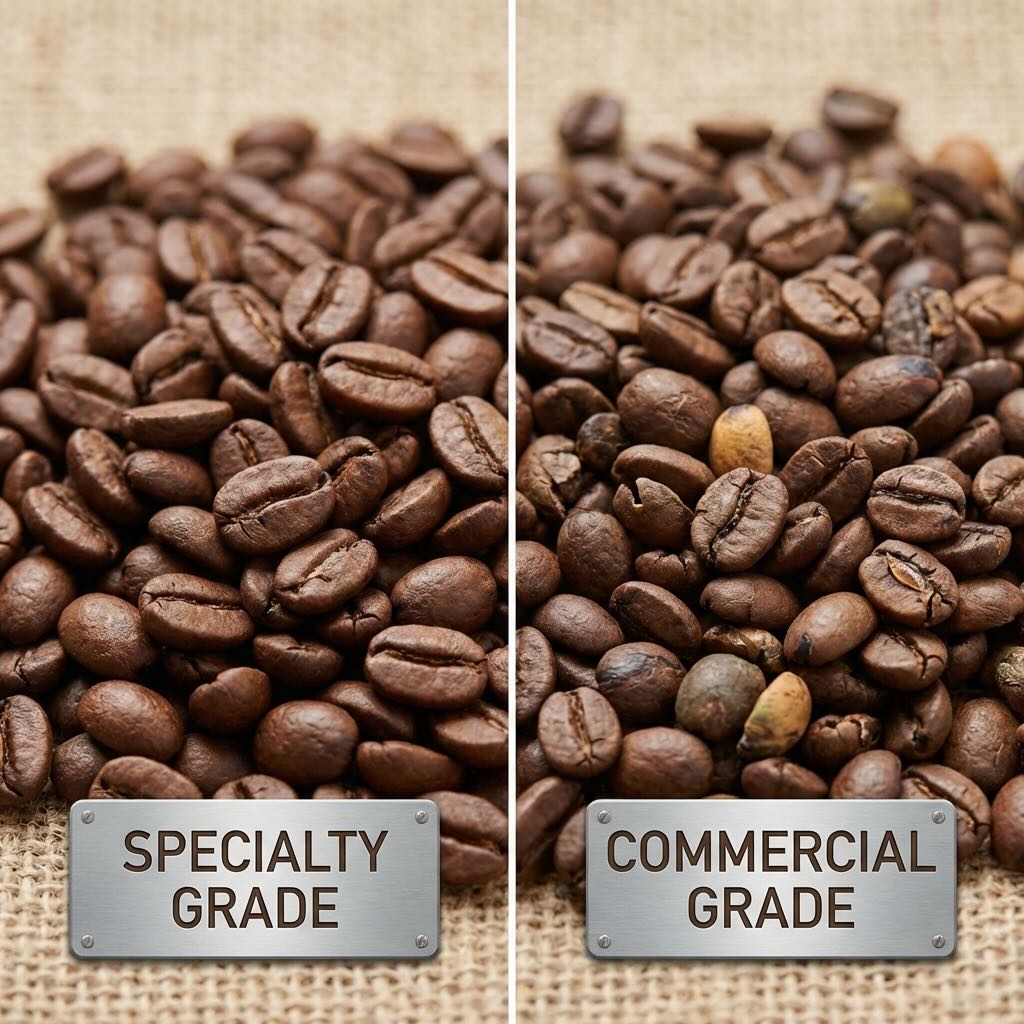
The highly respected, reliable gold standard for global specialty grade coffee.
- 6.0-6.7mm distinct diameter
- Rock-solid, consistent quality
- Strictly less than 5% allowable defects
📦 Stage 5: Storage & Export Preparation
Proper Storage Conditions
Maintaining Absolute Freshness Until Export:
- GrainPro Bags: Expensive, triple-layer hermetic liner bags completely prevent fatal moisture and oxygen exposure.
- Temperature: Stored within strict, climate-controlled warehouses holding precisely 18-22°C.
- Humidity: Maintained permanently at 60-65% Relative Humidity.
- Ventilation: Engineered airflow constantly circulating to prevent stagnant, mold-inducing pockets.
- Palletization: Mandatory elevated storage (never resting on the bare floor) for maximum air circulation.
- Traceability: Sophisticated lot codes meticulously tracking the exact farm origin and the specific processing date.
🌍 Why Ugandan Arabica Stands Out for B2B Buyers
The wholesale green coffee revolution is being led rapidly by Ugandan origins. Here is exactly why:
🏔️ Unique Terroir
- Fertile volcanic soil absurdly rich in natural minerals.
- Towering high altitudes (1,200-2,300m).
- Comfortably consistent, reliable rainfall patterns.
- A distinct equatorial location (forcing slow, deliberate cherry development).
☕ Cup Profile
- Body: Satisfyingly medium to full.
- Acidity: Clean, bright, wine-like structure.
- Flavor Notes: Deep dark chocolate, red fruit, and subtle florals.
- Sweetness: A highly pronounced caramel and roasted brown sugar finish.
💰 Cost Advantages
- Routinely 20-30% lower than comparable Ethiopian specialty options.
- A highly stable, modernized commercial supply chain.
- Aggressive direct trade relationships entirely eliminate bloated middleman markups.
- Rock-solid, consistent quality guaranteed year-over-year.
✅ Certifications Available
- UCDA (Uganda Coffee Development Authority) Certified.
- Organic certification (available upon request).
- Fair Trade eligible options.
- Rainforest Alliance compatible sourcing.
📈 From Farm to Your Roastery: Timeline Summary
Full Production Cycle Breakdown:
- 🌱 Nursery to Planting: 12 intense months.
- 🌳 Maturation Period: 24-30 patient months.
- 🍒 Harvesting Season: 4-5 demanding months (November-March).
- ⚙️ Processing: 2-3 precise weeks per specific lot.
- 🔧 Milling & Grading: 1-2 rigid weeks.
- 📦 Storage & Export Prep: 2-8 organized weeks.
- 🚢 Shipping: 4-6 long weeks (via international sea freight).
Source Premium Ugandan Arabica Directly from the Producer
Skip the expensive middlemen. Secure traceable, farm-fresh coffee beans with absolute, transparent clarity into their origin, processing methods, and quality grading. Minimum order quantities for wholesale start at just 1 container (roughly 18-20 tons).
What You Get Form Us:
- ✅ Unbeatable direct pricing (often 20-30% below standard brokerage market rates).
- ✅ Full, undeniable traceability to specific high-altitude farms.
- ✅ Quality consistency strictly guaranteed by the UCDA.
- ✅ Highly flexible international shipping options (CIF/FOB).
- ✅ Free sample lots available aggressively before you commit to bulk orders.
🔬 Quality Assurance Throughout the Whole Process
Every single stage of modern Ugandan coffee farming involves rigorous, unrelenting quality controls:
Pre-Harvest QC
- Granular soil testing (tracking pH and micro-nutrients).
- Constant tree health monitoring.
- Daily cherry brix sweetness measurements.
- Pinpoint harvest timing optimization.
Post-Harvest QC
- Relentless moisture content testing.
- Strict physical defect visual analysis.
- Professional cupping scores following SCA protocol.
- Mandatory export quality documentation and certification.
🎯 Key Takeaways for B2B Coffee Buyers
- Traceability: Authentic Ugandan coffee offers comprehensive, full farm-to-export traceability, an essential requirement for specialty buyers and modern transparency demands.
- Processing Expertise: Cultivated wet processing methods consistently produce clean, predictable cup profiles ideal for either complex blending or standout single-origin retail offerings.
- Sustainable Practices: Local small-holder farmers rely heavily on natural sustainable coffee supply chain practices like organic compost processing and shade-grown cultivation, massively appealing to eco-conscious consumers.
- Competitive Pricing: Forging a direct trade relationship aggressively eliminates 3-4 bloated intermediaries, reducing your raw cost of goods sold (COGS) by 20-30% compared to traditional, outdated supply chains.
- Supply Reliability: Utilizing two distinct, robust harvest seasons provides year-round bulk availability and crucial supply security for your roastery.
Questions Wholesale Buyers Ask About Ugandan Coffee Farming
How long does coffee take to grow in Uganda?
Arabica coffee trees commonly take around three to four years from seedling to their first commercial harvest. Timing varies by variety, altitude, rainfall, farm practices, and plant health. After the first harvest, coffee quality and yield still depend on careful picking, processing, drying, storage, and lot management.
What makes Ugandan Arabica suitable for wholesale buyers?
Ugandan Arabica can suit wholesale buyers looking for traceable East African coffee with chocolate, fruit, and balanced-acidity profiles. Buyers should assess the individual lot rather than rely on country of origin alone. Request the variety, processing method, harvest information, physical specification, cup profile, available volume, and representative sample before ordering.
How does coffee processing affect the final cup profile?
Processing influences how the coffee tastes, behaves during roasting, and performs in the finished product. Washed coffees often present a cleaner profile, while natural and other processing methods can produce different fruit, sweetness, and body characteristics. Buyers should confirm the process for each lot and taste a sample using their own intended roast and recipe.
What should buyers check before ordering Ugandan green coffee beans?
Confirm the coffee’s origin, variety, harvest, process, grade, screen size, moisture specification, defect information, packaging, available quantity, and export documentation. A buyer should also request a representative sample and agree how substitutions will be handled if the original lot is no longer available. This makes repeat purchasing more predictable.