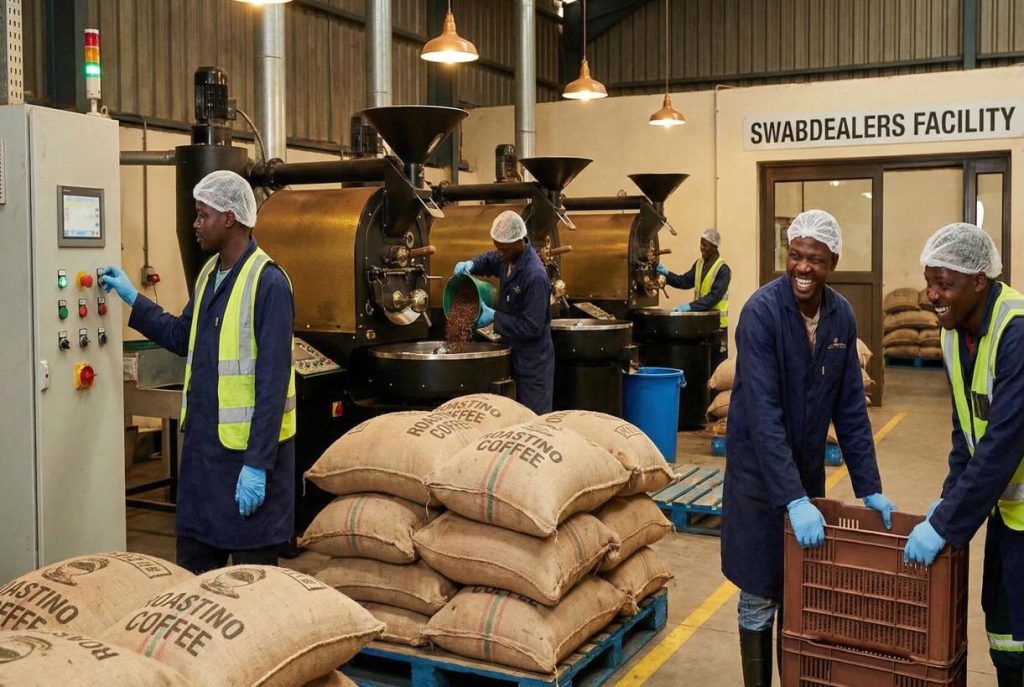
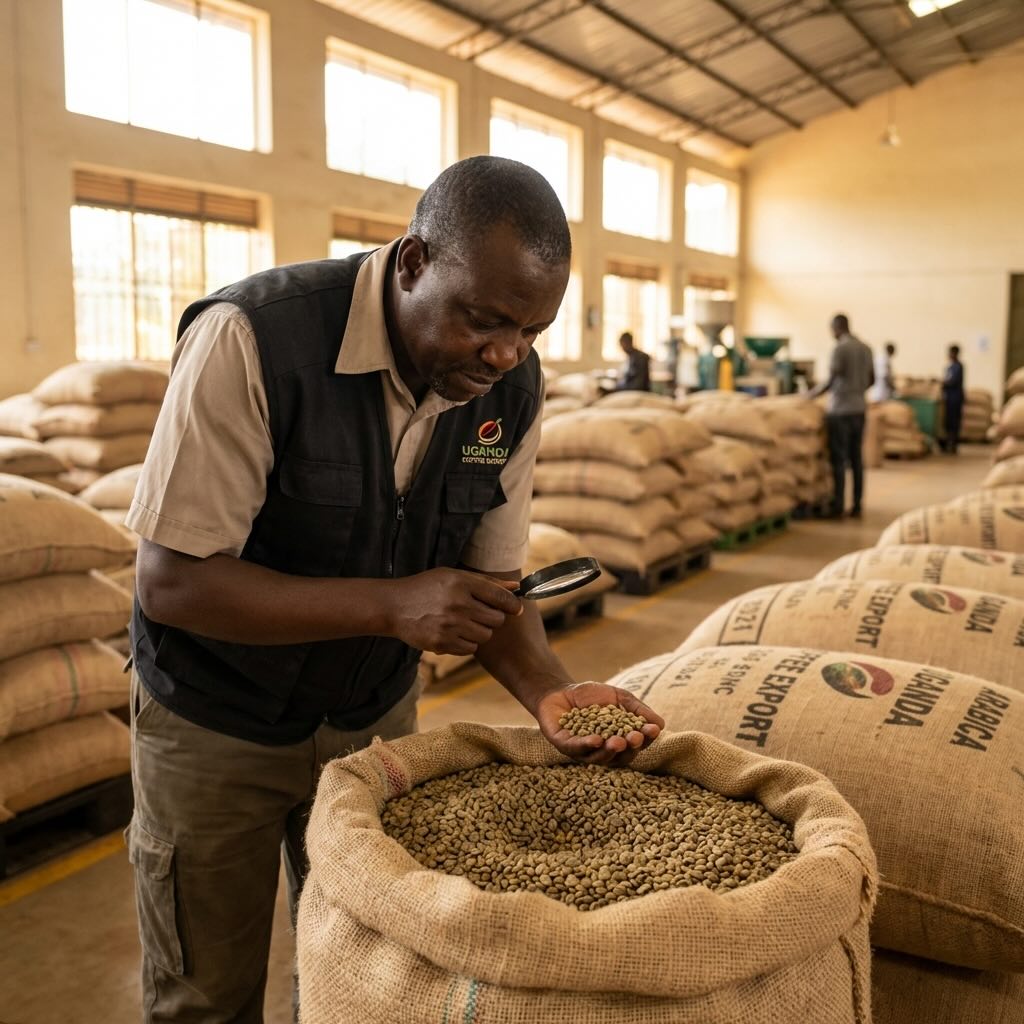
Whether your commercial operation is sourcing its first international container or expanding a current supply network, mastering professional green bean evaluation protects your financial investment and brand reputation. This technical guide methodically covers the analytical protocols that specialty coffee buyers use to assess unroasted coffee shipments.
Why Strict Pre-Purchase Evaluation Matters for Volume Buyers
Raw green coffee represents roughly 40% to 60% of your total operating costs as a commercial roaster. Procuring a single defective lot can cause severe issues:
- Waste dedicated roasting time and energy on unsalvageable material.
- Damage B2B relationships with café and retail clients who expect operational consistency.
- Create warehouse storage problems if the base moisture content arrives too high.
- Undermine your brand’s reputation in competitive local markets.
The Specialty Coffee Association notes that even minor physical defects can reduce final cupping scores by 5-10 points. This represents the financial gap between specialty-grade coffee commanding premium prices and commercial-grade stock that barely covers freight costs.
Step 1: The Initial Visual Inspection
Before any technical equipment is used, you must know how to read raw green beans visually. Experienced buyers can identify structural issues within seconds of opening a sample bag.
Comprehensive Color Consistency
Healthy, properly processed raw coffee should display a relatively uniform color. This typically ranges from blue-green to pale green, depending on the botanical variety and processing method. Watch for the following issues:
- Faded or brownish beans: Indicates stale old crop, poor warehouse storage, or severe environmental moisture loss.
- Whitish or bleached beans: Points to possible agricultural frost damage or destructive over-fermentation at the washing station.
- Uneven coloration: A potential mix comprised of multiple different crop years or processing lots blended together.
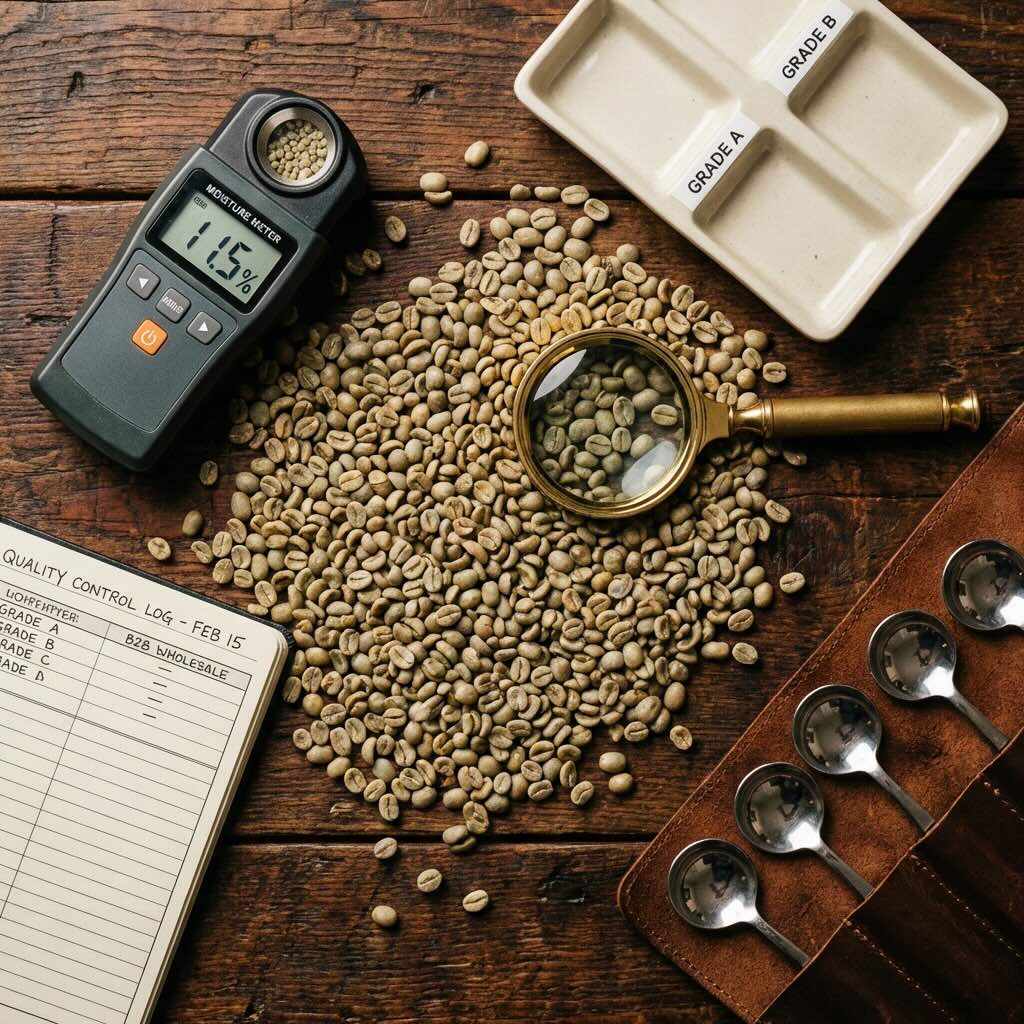
Essential quality control tools utilized for evaluating raw coffee before executing a purchase contract.
Green Coffee Beans Crucial Size Uniformity and Density
Consistent bean size dictates your actual roasting behavior in the drum. Erratic mixed bean sizes roast unevenly, leaving small beans overdeveloped while larger beans remain sour and underdeveloped. Always request screen size specifications (typically a 15-18 rating for premium Arabica) and verify the provided sample matches the export documentation.
SCA Defect Identification
The Specialty Coffee Association recognizes two severity categories of physical coffee defects:
| Category 1 Defects (Primary) | Category 2 Defects (Secondary) |
|---|---|
| Full black beans | Partial visually black beans |
| Full sour beans | Partial sourly discolored beans |
| Dried agricultural cherry pods | Low-density floaters |
| Fungus-damaged porous beans | Immature pale beans |
| Foreign matter (stones, sticks) | Broken shells or cracked beans |
| Severe insect boring damage | Slight superficial insect damage |
For elite specialty-grade commercial classification, a standard 350g evaluation sample cannot contain any Category 1 defects and allows no more than 5 minor Category 2 defects.
Step 2: Internal Moisture Content Testing
Extracted moisture content is arguably the most critical technical specification for safe bulk raw coffee logistics. It dictates long-term storage stability, shipping weight accuracy, chemical roasting behavior, and final cup quality.
Optimal Target Moisture Ranges
- Optimal: 10-12% internal moisture content.
- Acceptable: 9-13%, requiring proper climate storage adjustments.
- Reject threshold: Anything below 8% (over-dried, creating rapid flavor fade) or above 13% (high mold development risk).
Professional Testing Methods
Portable digital moisture meters designed for raw coffee provide instant accurate readings and typically cost between $200-$800. For best results:
- Take multiple varied readings from different vertical areas of the sample bag.
- Ensure the beans have acclimated to the ambient room temperature. Cold beans will read incorrectly higher.
- Average at least 5 distinct readings for your final risk assessment.
- Compare your tested readings against the commercial seller’s export documentation.
Step 3: Water Activity (aw) Measurement
Moving beyond simple moisture content, measuring actual water activity (aw) determines how chemically available that moisture is for supporting biochemical reactions natively, including mold growth. Two samples with identical total moisture content can have different water activity levels depending on their native processing and storage conditions.
The ideal target water activity for stable green coffee shipment is 0.50-0.60 aw.
Readings testing above 0.70 aw indicate a significant mold risk and impending cup quality degradation, regardless of the base moisture percentage.
Step 4: Cellular Density and Hardness Assessment
Dense, physically hard beans correlate with higher-altitude cultivation and more developed flavor complexity.
The Drop Test
Drop a solid handful of beans onto a hard, flat surface from waist height. Dense, healthy premium beans produce a sharp, distinct clicking sound. Soft or degraded porous beans make a flatter, dull hollow sound.
The Bite Test
Carefully press a single green bean between your teeth. Quality healthy beans require significant jaw pressure to crack open. Structurally damaged or soft beans will crush easily or crumble, which is a clear indicator of frost damage, over-fermentation, or crop deterioration.
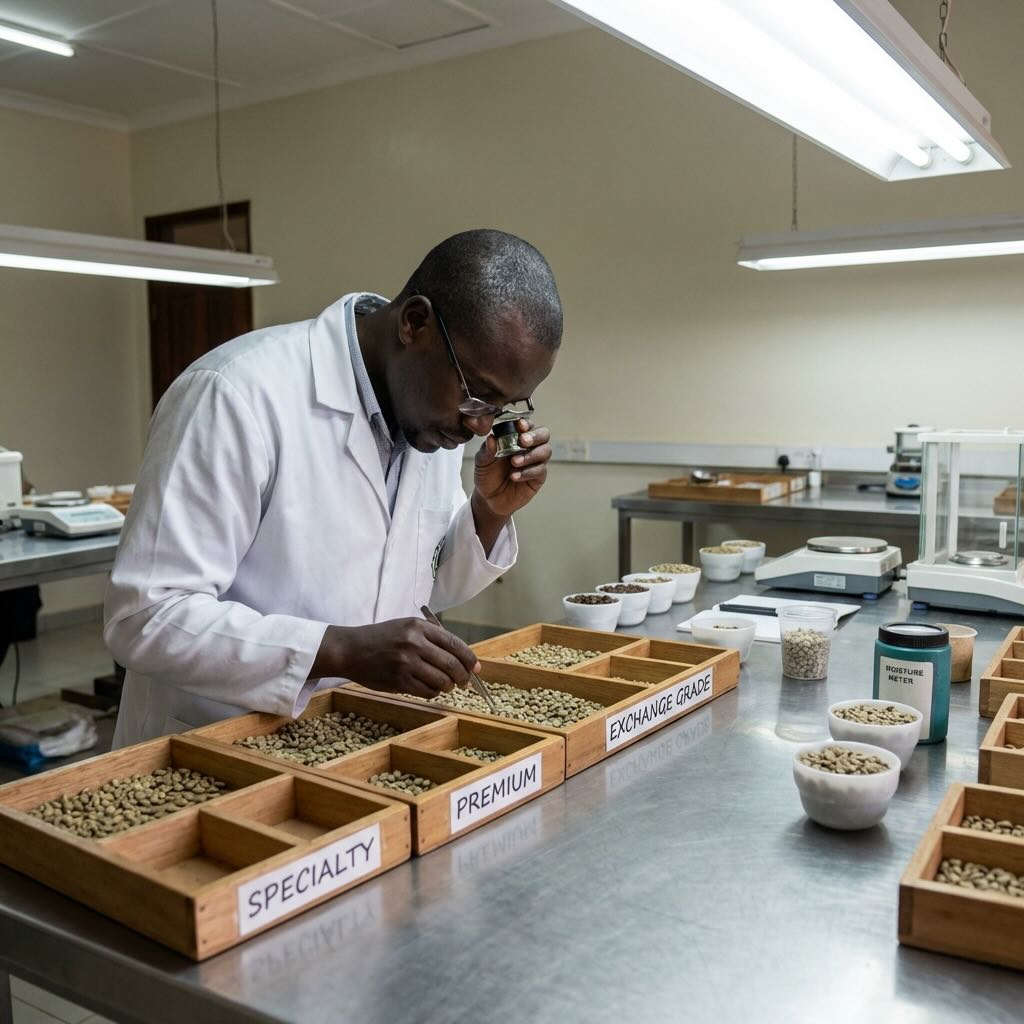
Professional certified coffee graders manually sort raw beans according to strict international quality scoring standards.
Step 5: Pre-Shipment Sample Cupping
Visual and technical evaluation tells you whether a coffee is structurally viable. Cupping tells you whether it matches your final quality tier and consumer expectations.
For purchases exceeding 500kg, always request pre-shipment samples (PSS). These must be drawn from the actual physical lot you are purchasing, rather than a representative sample from a past harvest.
Cupping Protocol Essentials
- Roast samples identically: Execute a light-to-medium roast 24-72 hours before the cupping session.
- Use consistent ratios: Use 8.25g of ground coffee per 150ml of water following the standard SCA baseline ratio.
- Ensure proper water temperature: Use 92-96°C water at the point of pour.
- Evaluate the cup systematically: Note the fragrance, aroma, flavor, aftertaste, acidity, body balance, uniformity, and organic sweetness.
Building Reliable Long-Term Supplier Relationships
Consistent B2B cup quality ultimately comes from maintaining communicative, consistent trade partnerships. When you find suppliers who meet your exact standards:
- Provide highly detailed cupping feedback on every shipment.
- Always share your specific physical quality requirements tracking clearly from day one.
- Consider multi-season direct trade contracts that give origin suppliers stable financial security.
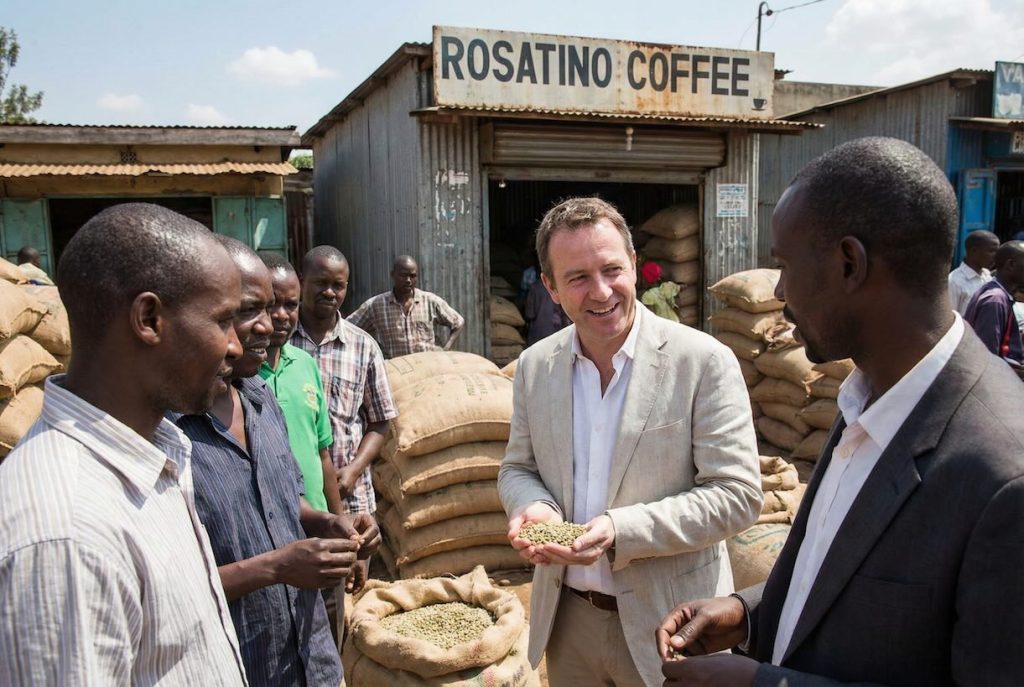
- Visit the farming origins when possible to actively deepen your mutual brand commitment.
🔬 Eliminate Sourcing Risk with Swab Dealers
At Swab Dealers Ltd., we understand that elite commercial quality evaluation is non-negotiable. Every massive premium lot that leaves our facility includes comprehensive physical grading documentation, pre-shipment cupping profiles, and 100% logistical export traceability directly back to the high-altitude farmers acting on Mt. Elgon’s slopes.
Request Verified Quality PSS Samples