Ethiopian vs Ugandan Coffee Beans: A B2B Wholesaler’s Comparison
Ethiopian vs Ugandan Coffee Beans: A B2B Wholesaler’s Comparison
When specialty coffee buyers evaluate East African origins, two countries dominate the conversation: Ethiopia, the birthplace of coffee with unmatched heritage, and Uganda, the continent’s second-largest producer with rapidly improving quality and competitive pricing. For wholesalers and roasters making sourcing decisions, understanding the differences between Ethiopian coffee beans and Ugandan alternatives can significantly impact your product lineup, profit margins, and supplier relationships.
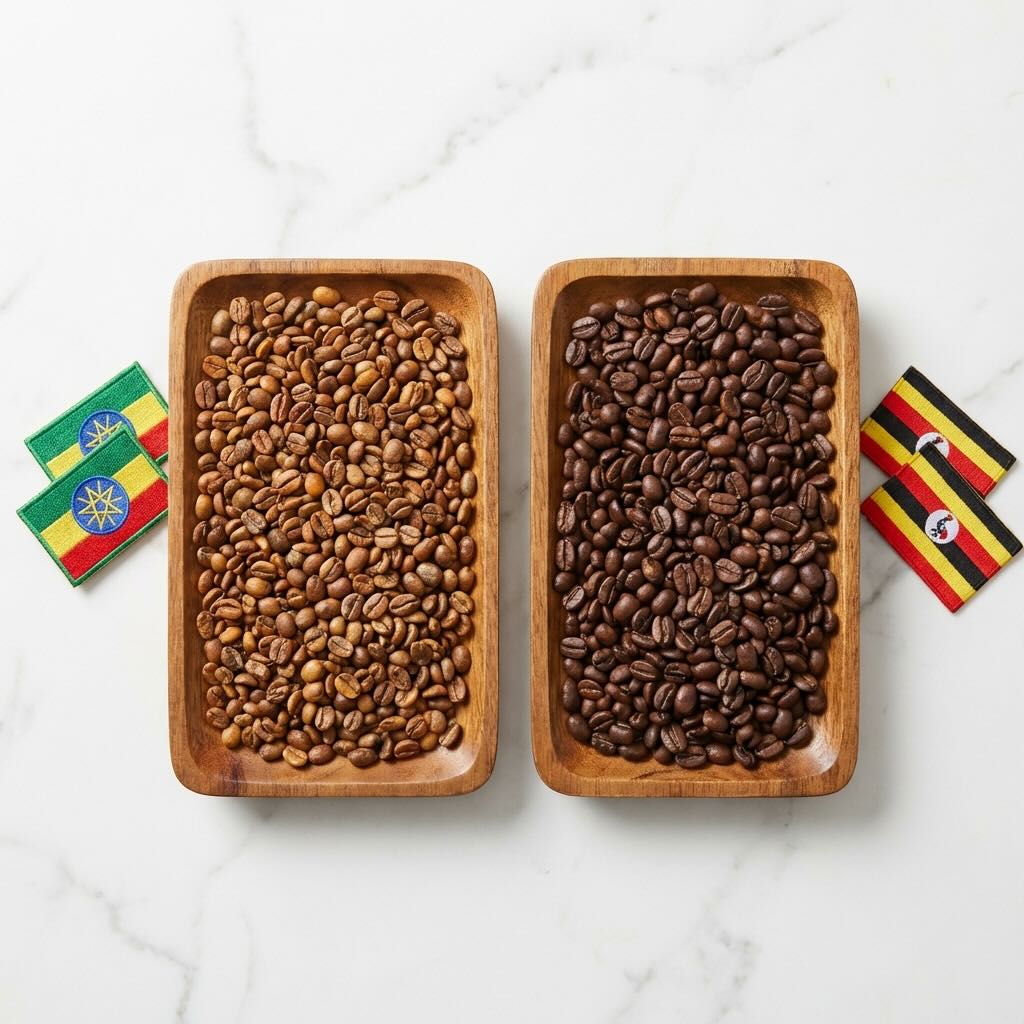
This analysis examines both origins across the metrics that matter most to commercial coffee buyers: flavor characteristics, quality consistency, pricing dynamics, supply chain reliability, and market positioning opportunities.
Geographic and Agricultural Context
Both nations benefit from the volcanic soils and high-altitude terrain that define premium coffee production in East Africa. However, their coffee histories and agricultural structures differ substantially.
Ethiopia: The Original Coffee Origin
| Annual Production | ~450,000 metric tons |
| Global Rank | #5 worldwide, #1 in Africa |
| Arabica Percentage | 100% Arabica |
| Primary Growing Regions | Yirgacheffe, Sidamo, Guji, Harrar, Limu |
| Typical Altitude | 1,400-2,200 meters |
| Farm Structure | 4+ million smallholders, average 0.5-2 hectares |
Ethiopia’s coffee sector is regulated through the Ethiopia Commodity Exchange (ECX), which affects traceability and direct trade possibilities. Recent reforms have improved farm-gate access for international buyers, though navigating the system still requires established importer relationships.
Uganda: Africa’s Emerging Specialty Origin
| Annual Production | ~380,000 metric tons |
| Global Rank | #8 worldwide, #2 in Africa |
| Arabica Percentage | ~20% Arabica, 80% Robusta |
| Primary Arabica Regions | Mt. Elgon, Rwenzori Mountains, West Nile |
| Typical Altitude | 1,500-2,300 meters |
| Farm Structure | 1.7+ million smallholders, expanding cooperative network |
Uganda’s Arabica production, particularly from the Mt. Elgon slopes, has gained specialty recognition in recent years. The country’s coffee export structure allows more straightforward direct trade relationships, with fewer bureaucratic layers between farmers and international buyers.
Flavor Profile Comparison
Understanding typical cup characteristics helps wholesalers position products for specific market segments and roaster requirements.
Ethiopian Flavor Signatures
Ethiopian coffee beans are renowned for complexity and distinctiveness that varies dramatically by region:
- Yirgacheffe (washed): Bright citrus acidity, floral aromatics (jasmine, bergamot), tea-like body, clean finish
- Sidamo (natural): Intense berry and tropical fruit, wine-like acidity, heavier body, sweet finish
- Guji: Stone fruit, complex florals, balanced sweetness, medium body
- Harrar (natural): Blueberry, dark chocolate, earthy undertones, full body
The diversity within Ethiopia means buyers can source dramatically different profiles from a single origin country—valuable for roasters building varied product lines.
Ugandan Flavor Signatures
Ugandan Arabica typically presents a more unified flavor signature across regions:
- Mt. Elgon: Chocolate and caramel sweetness, stone fruit undertones, balanced citrus acidity, medium-to-full body
- Rwenzori: Nutty base notes, subtle fruit acidity, clean finish, excellent espresso potential
- West Nile: Heavier body, earthy sweetness, lower acidity, suited for dark roasts and blends
The consistency of Ugandan profiles makes them excellent as base coffees for blends or as approachable single-origins for cafés serving mainstream consumers.
Quality Scoring and Grading
Specialty Coffee Association (SCA) scoring provides standardized quality comparison across origins.
Typical SCA Score Ranges
| Origin | Commercial Grade | Premium Grade | Specialty Grade | Exceptional Lots |
|---|---|---|---|---|
| Ethiopian | 78-80 | 80-84 | 84-88 | 88-92+ |
| Ugandan Arabica | 78-80 | 80-83 | 83-86 | 86-89 |
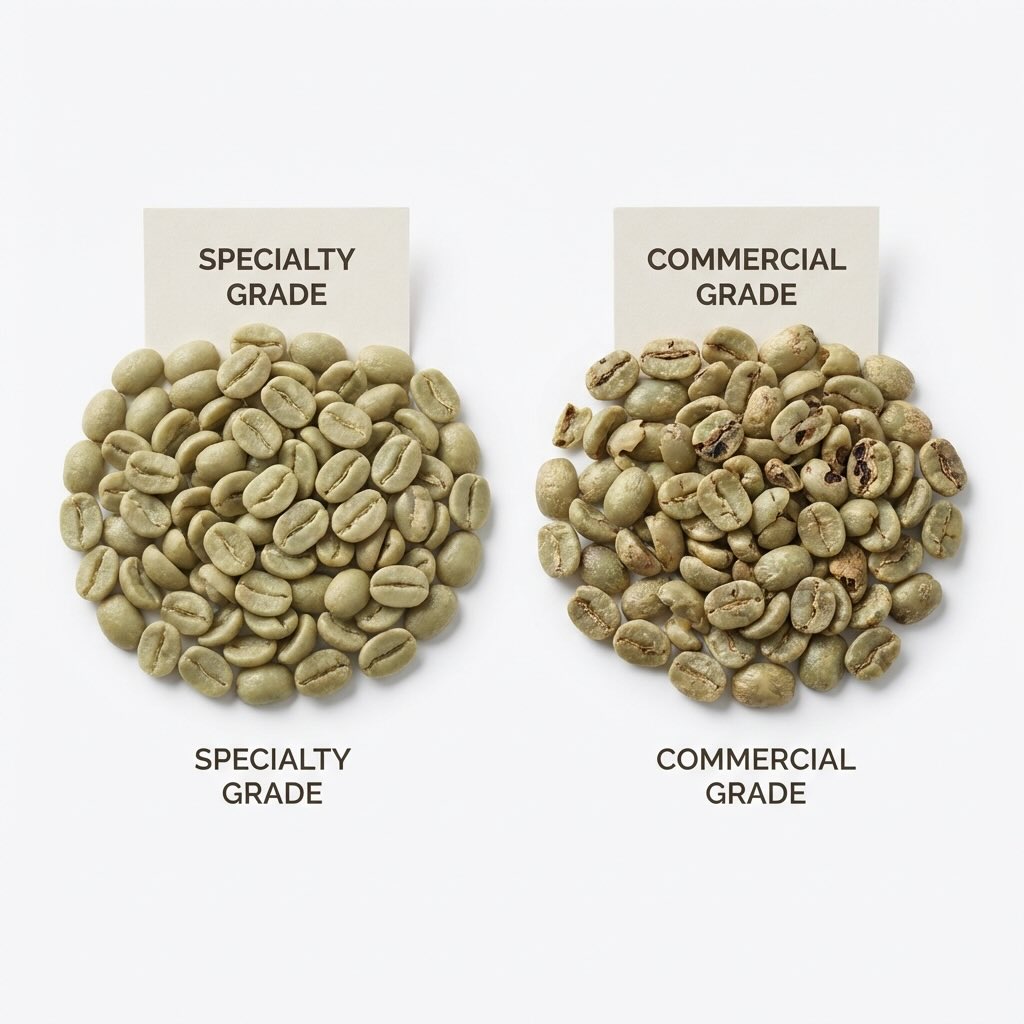
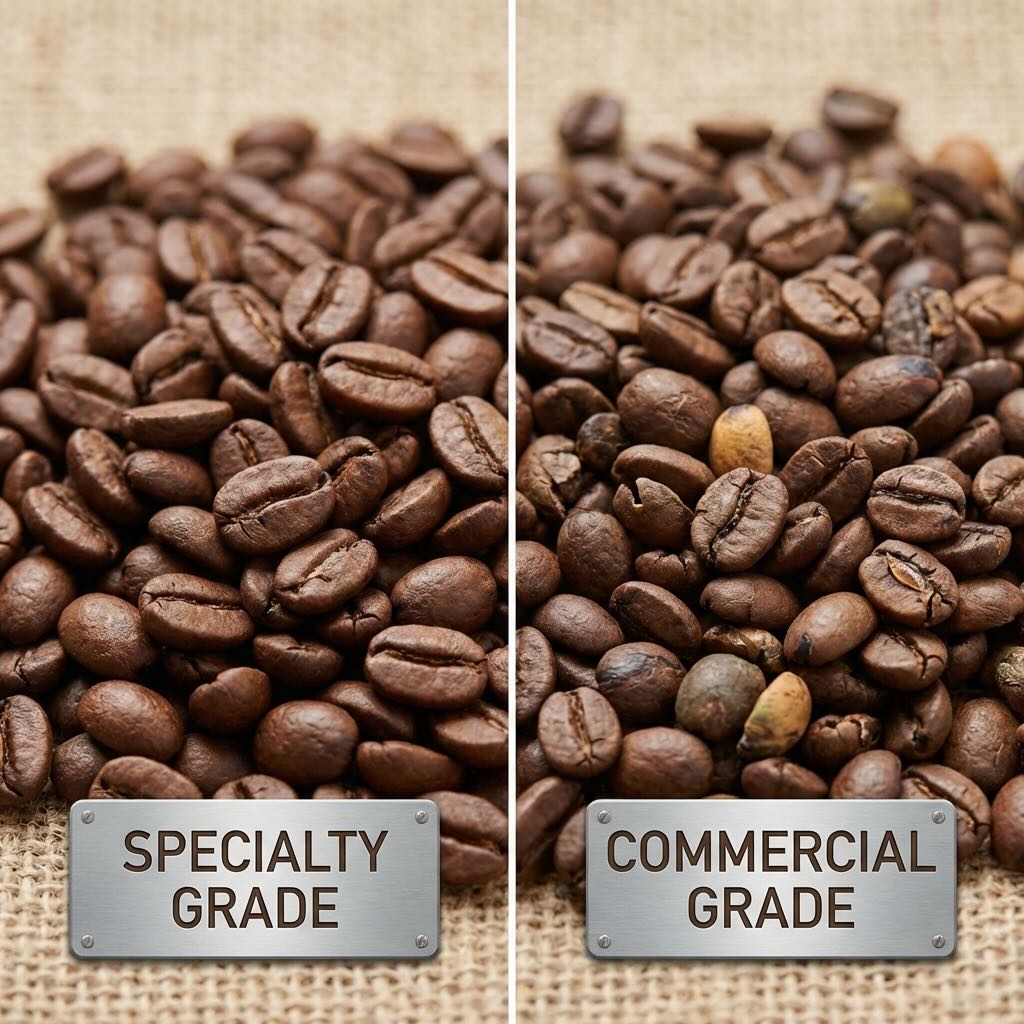
Ethiopian coffees achieve higher peak scores and compete successfully in Specialty Coffee Association of America (SCAA) competitions. However, the gap has narrowed significantly as Ugandan cooperatives invest in quality processing and international buyers provide feedback and market access.
Defect Rates and Consistency
Professional buyers report that Ugandan lots often show better consistency within individual shipments, while Ethiopian lots can vary more dramatically even within the same cooperative. This difference affects:
- Blend formulation stability
- Roast profile repeatability
- Customer expectation management
Pricing Analysis: FOB and Landed Costs
Price competitiveness significantly influences sourcing decisions, particularly for volume buyers building sustainable business models.
Current Market Pricing (2025-2026 Ranges)
| Category | Ethiopian (FOB/kg) | Ugandan (FOB/kg) | Price Advantage |
|---|---|---|---|
| Commercial Arabica | $3.20-3.80 | $2.40-2.90 | Uganda 25-30% lower |
| Specialty (84+) | $4.50-6.00 | $3.50-4.50 | Uganda 20-25% lower |
| Micro-lots (88+) | $8.00-15.00+ | $5.50-8.00 | Uganda 30-45% lower |
The price differential between Ethiopian coffee beans and Ugandan alternatives represents a significant margin opportunity for roasters. A café roaster processing 500kg monthly could save $500-750 on green coffee costs by substituting Ugandan Arabica for comparable Ethiopian grades—without compromising cup quality.
Price Volatility Factors
Ethiopian pricing shows higher volatility due to:
- Government export regulations and currency controls
- Climate-related production fluctuations
- Strong global demand for identified microlots
Ugandan pricing tends to be more stable due to:
- Less regulated export environment
- Growing production capacity meeting market demand
- Lower international brand recognition (for now)
Supply Chain and Logistics Comparison
Reliability matters as much as quality when building commercial sourcing relationships.
Export Infrastructure
🇪🇹 Ethiopia
- Landlocked country; exports route through Djibouti port
- ECX system can create traceability challenges for direct relationships
- Container availability can be inconsistent during peak season
- Transit times to European ports: 25-35 days
🇺🇬 Uganda
- Landlocked but with established route through Mombasa, Kenya
- Straightforward export documentation and direct trade access
- Growing specialty export infrastructure through progressive companies
- Transit times to European ports: 20-28 days
Lead Times and Contract Flexibility
Ugandan exporters generally offer more flexibility on minimum order quantities (MOQ), partial shipments, and payment terms—advantages for smaller roasters building sourcing relationships.
Market Positioning Opportunities
How you position these origins affects retail pricing power and customer perception.
Ethiopian Coffee: The Heritage Premium
Ethiopian coffee beans carry inherent storytelling advantages:
- “Birthplace of coffee” narrative resonates with specialty consumers
- Established name recognition in developed coffee markets
- Premium positioning expectations support higher retail prices
- Well-documented regional distinctions enable diverse product lines
Ugandan Coffee: The Discovery Opportunity
Ugandan origins offer different marketing advantages:
- “Undiscovered gem” positioning appeals to adventurous consumers
- Quality-to-price ratio creates value perception
- Direct trade stories with farmer traceability
- Less brand competition in the specialty segment
Practical Sourcing Recommendations
Based on buyer profile and business model, here’s when each origin makes strategic sense:
Choose Ethiopian When:
- You compete on quality prestige and can command $25+/kg retail pricing
- Your customers actively seek Ethiopian-origin coffee by name
- You need maximum flavor diversity from a single origin
- You have established importer relationships for consistent access
Choose Ugandan When:
- Value-for-quality ratio drives your business model
- You need reliable base coffee for espresso blends
- Direct trade transparency strengthens your brand narrative
- You’re building supplier relationships for long-term growth
- Your market is still developing specialty coffee appreciation
Blend Both When:
- You want to combine Ethiopian complexity with Ugandan body and consistency
- You need to manage costs while maintaining quality benchmarks
- Your product line includes both premium and accessible offerings
Quality Sourcing from East Africa
Whether you’re seeking Ethiopian microlots or exploring Ugandan specialty potential, working with exporters who prioritize quality throughout the supply chain determines your outcomes more than origin alone.
At Swab Dealers, we specialize in Ugandan Arabica from Mt. Elgon’s premium growing regions—coffees scoring 83-88 SCA points at pricing that supports sustainable margins for roasters of all sizes. Our direct relationships with farmer cooperatives ensure traceability, consistent quality, and pricing transparency.
Request Wholesale Samples →