Dark Roast vs Medium Roast vs Light Roast: Which Coffee Roast Level Actually Sells Best at Wholesale?
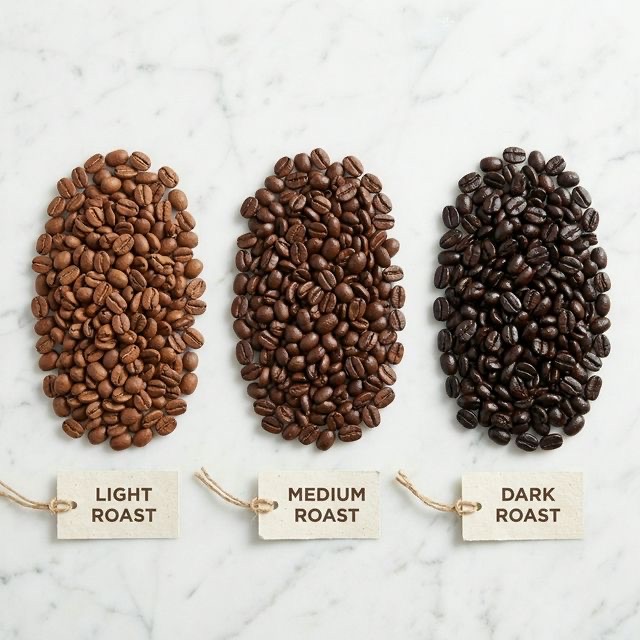
Dark Roast vs Medium Roast vs Light Roast: Which Coffee Roast Level Actually Sells Best at Wholesale?
Every roaster I’ve worked with has an opinion about which roast level is “best.” Specialty purists insist on light roast to preserve origin character. Traditional buyers swear by dark roast coffee for its bold, familiar flavor. And somewhere in the middle, medium roast quietly outsells both of them. But the real question isn’t which is better — it’s which roast level fits your market, your customers, and your margins. Let’s look at the actual data instead of the ideology.
Whether you’re deciding which roast levels to offer wholesale, advising café clients on their menu strategy, or selecting green coffee suited for specific roast profiles, understanding the business dynamics behind each roast level matters as much as the flavor differences.
Understanding the Roast Spectrum
Coffee roasting is controlled thermal decomposition. As green beans absorb heat, they undergo chemical reactions that create flavor compounds, develop color, and change physical structure. The longer and hotter the roast, the more the process moves from expressing origin character to expressing roast character.
| Roast Level | Internal Temp | Color | Flavor Character |
|---|---|---|---|
| Light (Cinnamon, City) | 196–205°C | Light brown, dry surface | Origin-forward, bright acidity, floral/fruity, tea-like body |
| Medium (City+, Full City) | 210–225°C | Medium brown, slight oil | Balanced, chocolate/caramel, moderate acidity, fuller body |
| Dark (Full City+, French, Italian) | 225–245°C | Dark brown to black, oily | Roast-forward, smoky/bitter, low acidity, heavy body |
Light Roast Coffee: The Specialty Favorite
Light roast coffee preserves the most origin character. Acidity is pronounced, fruit and floral notes are vivid, and the bean’s terroir shines through. This is why specialty roasters and third-wave cafés gravitate toward lighter roasts — they showcase the unique qualities that make specialty coffee worth the premium.
Where Light Roast Excels
- Pour-over and filter: Longer extraction time benefits from light roast complexity
- Specialty retail: Educated consumers who want origin-specific flavor experiences
- Single origin showcases: Light roasting lets Ethiopian florals and Ugandan citrus notes speak for themselves
- Competition and cupping: Professional coffee evaluation uses light roasts exclusively
Light Roast Wholesale Challenges
- Narrower audience: Many mainstream consumers find light roasts “too acidic” or “sour” — perceptions that limit your market
- Espresso difficulty: Light roasts are harder to extract as espresso — they require precise grind settings and typically produce thinner shots
- Milk compatibility: Pronounced acidity can clash with milk in lattes and cappuccinos
- Bean quality dependency: Light roasting reveals every defect. You need genuinely specialty-grade beans — there’s nowhere for mediocre coffee to hide
Medium Roast Coffee: The Volume Champion
Here’s the truth that roasting ideologues on both sides don’t like to admit: medium roast coffee outsells light and dark roasts combined in most wholesale markets. And there’s a rational business reason.
Medium roasting develops enough caramelization to create sweetness and body while retaining enough origin character to taste interesting. It’s the Goldilocks zone — not too acidic for mainstream palates, not too bitter for quality-conscious consumers.
Where Medium Roast Dominates
- Espresso: Medium roasts produce balanced espresso shots with sweetness, body, and pleasant chocolate/nutty notes that work beautifully with milk
- Café house blends: Most successful café house blends sit in the medium range because they need to please the widest possible customer base
- Omni-roast flexibility: Medium roasts perform well as both espresso and filter, simplifying inventory for cafés
- Retail bags: Consumers buying coffee for home use overwhelmingly prefer medium roast according to market research
The Margin Advantage
Medium roast offers an interesting margin dynamic: you can use high-quality green coffee (Ugandan or Colombian specialty-grade) to produce genuinely excellent medium roasts, and the market will pay a premium for it. But you can also produce solid medium roasts from good commercial-grade coffee that still taste better than what most consumers experience daily. This flexibility gives you pricing power across multiple market segments.
Dark Roast Coffee: Bold, Familiar, and Still In Demand
Reports of dark roast coffee’s death have been greatly exaggerated. While specialty cafés have shifted toward lighter profiles, the broader wholesale market — hotels, restaurants, offices, convenience stores — still demands dark roasts. And the margins can be surprisingly good.
Where Dark Roast Holds Strong
- Traditional markets: Middle Eastern, Southern European, and many Asian markets strongly prefer darker roasts
- Office and hotel supply: Institutional coffee service overwhelmingly specs dark roast for its bold, familiar flavor
- Espresso-dominant cafés: Many espresso cultures (Italian, Turkish) prefer darker roast profiles
- Cold brew production: Medium-dark to dark roasts produce the smooth, chocolatey cold brew concentrate that consumers prefer
- Flavored coffee base: Dark roasts serve as the base for flavored coffee products where the roast character complements added flavors
The Green Bean Strategy for Dark Roast
Here’s a business insight many roasters miss: dark roasting allows you to use less expensive green coffee without significantly compromising the final product. The Maillard reaction and caramelization during deep roasting develop flavors that mask subtle origin differences. A solid commercial-grade Arabica from Uganda, roasted dark, can produce a final product that competes with more expensive origins roasted to the same level.
This doesn’t mean you should use poor quality beans for dark roast — defects still matter. But the price differential between specialty-grade and good commercial-grade Arabica becomes less relevant as roast development increases.
Which Roast Levels Should You Stock?
The answer depends entirely on your market. Here’s a framework based on business type:
| Business Type | Primary Roast | Secondary | Rationale |
|---|---|---|---|
| Specialty Roaster (retail) | Light–Medium | Medium | Showcase origin quality, build connoisseur audience |
| Wholesale to Cafés | Medium | Medium-Dark | Espresso performance, maximum customer appeal |
| Commercial/Institutional | Dark | Medium | Bold, familiar, cost-efficient |
| Multi-Channel (all markets) | Medium | Light + Dark | Cover all segments, medium as your volume driver |
Matching Green Coffee to Roast Level
This is where sourcing strategy and roast level strategy converge. Not every green coffee performs equally at every roast level. Here’s what to look for:
For Light Roasts
- High-altitude, specialty-grade beans (80+ cupping score minimum)
- Heritage varieties (SL-14, Bourbon, Geisha) with complex flavor potential
- Washed processed for maximum clarity
- Current crop — freshness matters most at light roast levels
For Medium Roasts
- Good commercial to specialty-grade Arabica (78+ cupping score)
- Versatile origins: Uganda, Colombia, Guatemala, Brazil
- Washed or honey processed for balanced sweetness
- Focus on body and natural sweetness over bright acidity
For Dark Roasts
- Solid commercial-grade Arabica with clean cup (no defects)
- Full-bodied origins: Uganda, Brazil, Sumatra
- Any processing method — dark roasting minimizes processing flavor differences
- Moisture content 10–12% for even heat absorption during extended roasting
The Smart Wholesale Approach
The most successful roasters I’ve worked with don’t pick one roast level and defend it ideologically. They read their market, offer what sells, and use roast level as a strategic tool for different customer segments and margin targets. Dark roast coffee isn’t inferior — it serves different markets. Light roast isn’t superior — it serves different audiences. And medium roast isn’t boring — it’s the revenue engine that funds your specialty experiments.
Source the right green coffee for each roast level, develop profiles that bring out the best in each bean, and let your customers tell you what they want to buy. The data will always beat the ideology.
Swab Dealers exports Ugandan Arabica in three distinct green profiles — each optimized for specific roast levels. From specialty-grade SL-14 for light roasts to robust commercial lots for dark roast programs, we match the right bean to your roasting strategy.
Request Roast-Matched Samples →