Coffee Processing Methods Explained: How Washed, Natural, and Honey Processing Shape What You Buy
Here’s a number that should change how you think about green coffee purchasing: the same variety of Arabica, grown on the same farm, at the same altitude, can taste completely different based on how it’s processed after harvest. Coffee processing methods account for up to 60% of a bean’s final flavor profile — more than roast level, more than brew method. If you’re buying wholesale coffee without understanding processing, you’re making decisions blind.
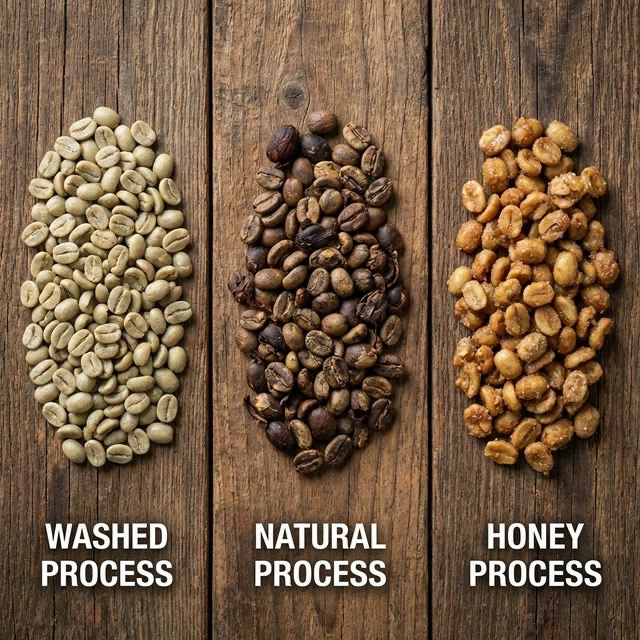
Understanding the three primary methods of coffee processing isn’t optional for modern wholesale buyers. It determines flavor expectations, shelf stability, pricing tiers, and how your downstream customers will perceive value. Let’s break down the data behind each method.
The Three Primary Coffee Processing Methods
After coffee cherries are picked, the seed (what we call the “bean”) needs to be separated from the fruit. How this separation happens — and what happens during the drying phase — defines the processing method and fundamentally alters the cup profile.
| Processing Method | Also Called | Key Flavor Impact | Cost to Produce |
|---|---|---|---|
| Washed (Wet) | Wet Process | Clean, bright acidity, clarity | Higher (requires water + equipment) |
| Natural (Dry) | Dry Process | Fruity, heavy body, sweetness | Lower (sun-drying, minimal equipment) |
| Honey | Pulped Natural | Balanced sweetness, medium body | Moderate (hybrid approach) |
Washed Coffee: Clean, Consistent, and the Industry Standard
Washed coffee is the most widely used processing method for specialty-grade Arabica, and there’s a good reason for that. The process prioritizes the intrinsic qualities of the bean itself, stripping away the fruit influence to reveal what the terroir and variety actually taste like.
How Washed Processing Works
- Pulping: Cherries pass through a depulper that removes the outer fruit skin and most of the pulp within hours of harvest.
- Fermentation: Beans sit in water tanks for 12–72 hours, depending on altitude and ambient temperature. Microbes break down the remaining mucilage layer.
- Washing: Beans are washed with clean water to remove all fermented mucilage residue.
- Drying: Clean parchment coffee is dried on raised beds or patios to 10–12% moisture content over 7–14 days.
What Washed Processing Means for Buyers
- Flavor profile: Clean cup, pronounced acidity, floral and citrus notes. The bean’s origin character shines through.
- Consistency: Washed lots tend to be more uniform than naturals, making them easier to roast consistently across batches.
- Shelf life: Lower risk of fermentation-related defects during storage. Well-processed washed coffee stores predictably for 8–12 months.
- Pricing: Generally higher than equivalent naturals due to water, infrastructure, and labor costs at the processing station.
Most of Uganda’s specialty-grade Arabica is washed processed, leveraging the abundant water sources on Mt. Elgon’s slopes. The resulting cup — clean, with chocolate and bright citrus notes — is what defines Ugandan Arabica in the specialty market.
Natural Process: Fruit-Forward Complexity
The natural process is the oldest method of coffee processing and remains dominant in regions where water is scarce. The entire cherry is dried intact around the bean, and the extended contact between seed and fruit creates distinctly fruity, wine-like characteristics.
How Natural Processing Works
- Sorting: Harvested cherries are sorted for ripeness — overripe or underripe cherries create off-flavors in the final cup.
- Drying: Whole cherries are spread on raised beds or patios and dried under sun for 2–4 weeks, being turned regularly.
- Monitoring: Careful temperature management prevents fermentation from going too far. This is the most risk-prone stage.
- Hulling: Once dried to 10–12% moisture, the dried fruit husk is mechanically removed to reveal the green bean.
What Natural Processing Means for Buyers
- Flavor profile: Berry, tropical fruit, wine-like qualities, heavy body, lower acidity. Can be intensely fruity.
- Variability: Higher batch-to-batch variation than washed coffees. Cupping pre-shipment samples is even more critical.
- Risk factors: Poorly processed naturals develop over-fermented, boozy, or phenolic flavors. Quality control at origin is essential.
- Market positioning: Natural processed specialty coffees have strong demand among third-wave consumers and can command premium pricing when executed well.
For wholesale buyers, naturals require more care in selection but offer distinctive flavor profiles that differentiate your offerings from competitors selling standard washed lots.
Honey Process: The Strategic Middle Ground
The honey process removes the skin but leaves varying amounts of the sticky mucilage (the “honey”) on the bean during drying. The amount of mucilage left creates a spectrum of styles from “white honey” (least mucilage) to “black honey” (most mucilage).
The Honey Processing Spectrum
| Honey Type | Mucilage Remaining | Drying Time | Flavor Tendency |
|---|---|---|---|
| White Honey | ~10–20% | Faster (8–10 days) | Cleaner, closest to washed |
| Yellow Honey | ~25–50% | Moderate (10–14 days) | Mild sweetness, balanced |
| Red Honey | ~50–75% | Longer (14–21 days) | Notable sweetness, fuller body |
| Black Honey | ~80–100% | Longest (21+ days) | Fruit-forward, closest to natural |
Why Honey Process Matters for Your Business
Honey processed coffees offer a strategic advantage in the wholesale market. They give roasters the fruit sweetness that consumers love from naturals, with more of the clarity and consistency that makes washed coffee easier to work with. For café clients, honey processed beans produce espresso shots with natural sweetness that reduces the need for sugar — a selling point that resonates with health-conscious consumers.
How Processing Affects Wholesale Pricing
Processing method directly impacts green coffee pricing at origin, but the relationship isn’t always what you’d expect:
- Washed Arabica typically carries the highest base price due to infrastructure and water costs. Specialty-grade washed Uganda Arabica ranges $5.00–$7.00/kg FOB.
- Natural process commands lower prices at commodity level but can equal or exceed washed pricing at specialty grade when quality is exceptional.
- Honey process occupies a middle ground on price, but high-quality red and black honeys from skilled producers can command specialty premiums.
The key insight for buyers: processing method affects your cost, but it affects your downstream selling price even more. A well-sourced natural or honey process coffee can offer better margins than washed, depending on your market positioning.
Choosing the Right Processing Method for Your Market
If You Serve Espresso-Focused Cafés
Start with washed or yellow honey processed beans. They produce espresso shots with clean flavors and consistent extraction — critical when your café clients are pulling hundreds of shots daily.
If You Target Specialty and Single-Serve Markets
Natural and red honey processed coffees create distinctive pour-over and filter experiences that specialty consumers actively seek out. These are your differentiation products.
If You Supply Multi-Channel Retail
Washed processed coffee offers the longest shelf stability and most predictable consumer experience. It’s the safest choice for retail bags sitting on shelves for weeks.
What to Ask Your Supplier About Processing
Every quality-focused green coffee supplier should be able to answer these questions without hesitation:
- What specific processing method was used for this lot?
- How long was the fermentation or drying period?
- What quality controls are in place during processing?
- Were cherries sorted for ripeness before processing?
- What was the final moisture content at export?
- Can you provide cupping notes comparing processing methods from the same farm?
If your current supplier can’t answer these questions, it’s worth considering whether they have the origin relationships necessary to deliver consistent quality.
Swab Dealers offers washed, natural, and honey processed Ugandan Arabica with full processing documentation. Every lot includes detailed processing records, moisture analysis, and pre-shipment cupping scores.