Why Sourcing Specialty Green Coffee from Uganda is the Best Investment for Roasters in 2026
The global coffee supply chain stands at an undeniably critical juncture. As we progress into 2026, independent roasters and large-scale commercial distributors alike face a severe volatility paradox: consumer demand for high-end “specialty” cup quality is at an all-time high, yet traditional supply lines originating from Brazil and Vietnam are becoming increasingly unpredictable due to radical climate fluctuations. For the astute B2B wholesale buyer, the long-term solution lies not in aggressively fighting for minute allocation in saturated markets, but in pivoting swiftly toward high-growth, high-value origins.
Enter Uganda. Once known globally primarily for its robust lowland Robusta, Uganda has quietly but completely undergone an agricultural revolution, emerging rapidly as a powerhouse for specialty green coffee. Recent wholesale market data indicates a massive surge in commercial interest—upwards of 9,900% growth in search volume for specific specialty green import terms—heavily suggesting that forward-thinking early adopters are already securing their supply chains.
This industry analysis explores the deep economic and qualitative arguments for shifting your commercial wholesale strategy directly toward Ugandan origins, specifically focusing on the Coffea arabica var. Bugisu cultivated on the towering volcanic slopes of Mount Elgon.
1. The Strict Economics of Green Coffee Beans Bulk Sourcing
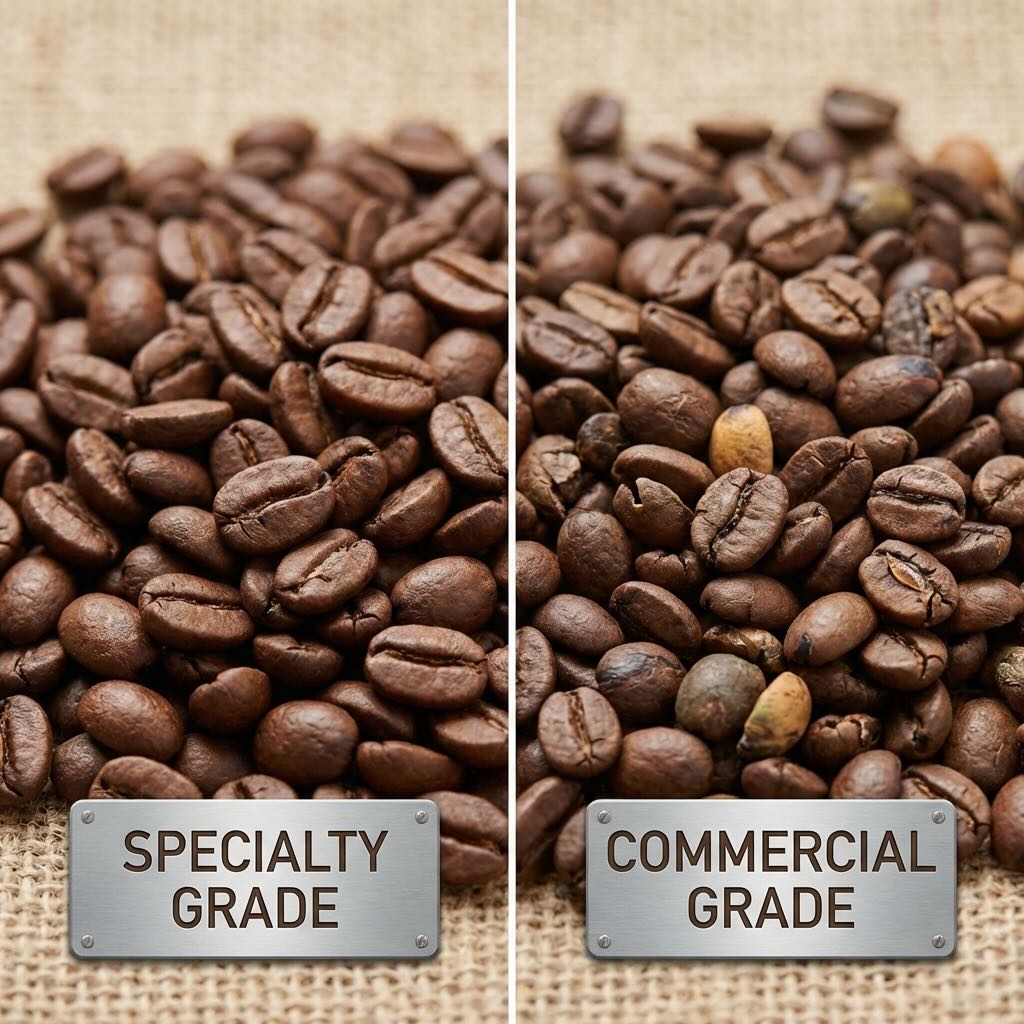
The primary pressure point for absolutely any coffee business—whether a localized boutique café chain or a massive international scale distributor—is the cost of goods sold (COGS). Outdated, traditional wisdom historically suggested buying “cheap” commercial fillers to forcefully lower costs. However, modern “Third Wave” consumers are highly sophisticated; their palates will actively detect quality drops immediately.
This reality creates a difficult operational dilemma: How exactly do you accurately maintain specialty cup scores (80+) without systematically destroying your profit margins? The concrete answer lies entirely in mastering the “Price-to-Quality Ratio” (PQR). Sourcing raw green coffee beans in bulk directly from Uganda offers a PQR that is currently unmatched in the global marketplace. While Ethiopian Yirgacheffe or Kenyan AA harvests demand exorbitant premium scarcity pricing, Ugandan high-altitude Arabica effortlessly offers startlingly similar cup profiles—complex acidity, rich body, and distinct notes of stone fruit—at a wholesale entry point that actively allows for incredibly healthy retail markups.
For large-scale distributors actively searching out reliable wholesale coffee beans, this structural advantage means you can confidently offer your B2B clients a verifiable “Premium Single Origin” at a highly competitive price point that heavily undercuts rival roasters relying on overtaxed South American imports.
2. The True Science of the Bean: Why Ugandan Arabica?
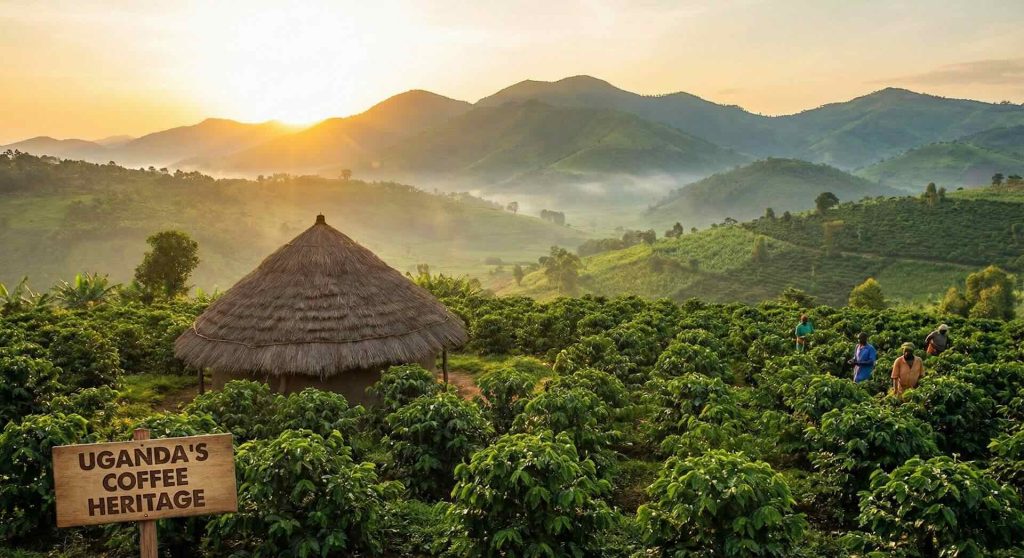
To fully understand this specific value proposition, one must look closely at the localized agronomy. Uganda’s pristine Mt. Elgon region sits at an aggressive altitude of 1,600 to 2,200 meters above sea level. In strict agricultural academic terms, Arabic beans successfully grown at this imposing elevation are universally classified as “Strictly Hard Bean” (SHB).
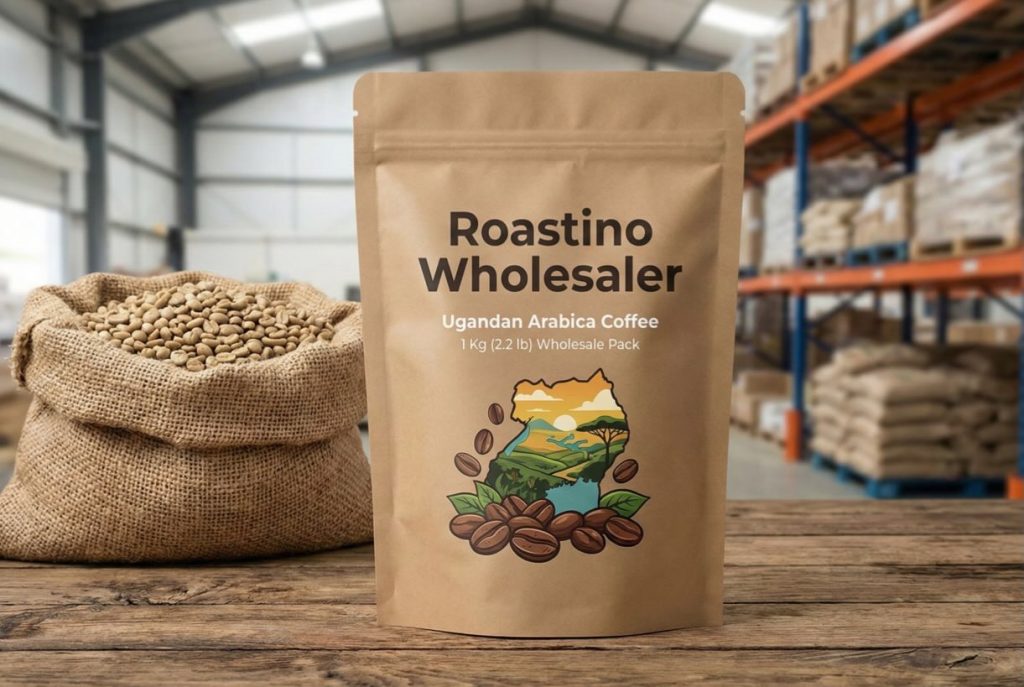
The cherry maturation process at this high altitude is painfully slower, deliberately allowing the coffee cherries ample time to fully develop vastly complex cellular sugars and immense physical density. When your production team roasts these dense beans, the final result is a cup with superior structural integrity and brilliant flavor clarity. Unlike cheaper, lower-altitude beans that predictably taste “flat” or unpleasantly “earthy,” our Roastino specialty selection reliably delivers the shimmering brightness strictly required for modern, complex filter roasts and the heavy, syrupy body needed for traditional espresso blend anchors.
The Vital Processing Advantage
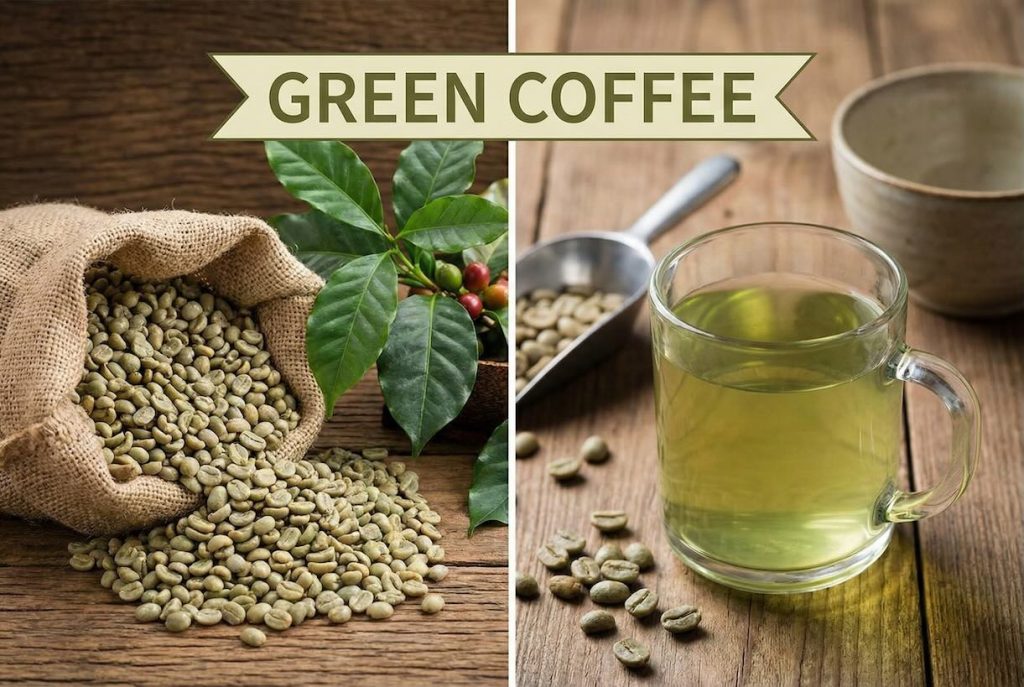
Uganda has seen massive, sweeping international investments in modern washing stations. The ongoing agricultural transition away from natural “Drugar” (Dried Ugandan Arabica) to fully washed processing infrastructure guarantees significantly cleaner cups and incredibly consistent defect counts. For the serious B2B buyer, consistency acts as tangible currency. When purchasing wholesale coffee beans, you need the absolute ironclad assurance that the very first sack unloaded from the container matches the quality of the very last.
3. Comparative Market Analysis: Uganda vs. The World
Roasters frequently ask how our Ugandan beans specifically stack up against the massive “Big Three” (Brazil, Vietnam, and Ethiopia). The following comparative matrix clearly outlines the strategic financial positioning of Ugandan coffee heading into the unpredictable 2026 market cycle.
| Origin | Primary Bean Type | Flavor Profile | 2026 Wholesale Value Outlook |
|---|---|---|---|
| Uganda (Mt. Elgon) | Arabica (Washed) | Full body, rich chocolate, bright citrus, stone fruit. | Very High (Currently Undervalued) |
| Ethiopia | Arabica (Heirloom) | Intensely floral, tea-like, delicate. | Medium (High cost volatility and supply delays) |
| Brazil | Arabica (Natural) | Nutty, sweet, dependably low acidity. | Low (Massive risk of frost & climate price spikes) |
| Vietnam | Robusta | Bitter, earthy, incredibly high caffeine. | Medium (Strictly volume driven, very low margin) |
As the data table demonstrates unequivocally, Uganda occupies a highly profitable, unique “sweet spot” in global sourcing. It effortlessly offers the highly sought-after complexity of a traditional East African coffee (like Ethiopian Yirgacheffe) paired intelligently with the heavy body and roasting reliability often associated with Central American origins. This rare versatility allows it to seamlessly serve duty as both a high-end, premium single-origin retail offering and a remarkably stable, high-margin anchor for your commercial espresso blends.
4. Strategic Sourcing: How to Aggressively Secure Your Supply
The massive impending “Breakout” trend in sourcing specialty green coffee heavily suggests that global supply competition will heat up dramatically. Smart, forward-looking wholesalers are rapidly moving purposefully away from risky spot buying and entering aggressively into secure forward contracts or executing direct relationships with origin suppliers.
At Swab Dealers, we expertly facilitate this direct connection. By completely bypassing the multiple, bloated layers of European or American commodities brokers, we successfully transport the raw beans directly from the high-altitude washing station straight to your commercial loading dock. This authentic Direct Trade model isn’t just a catchy marketing buzzword; it is a vital, mathematical supply chain efficiency that permanently retains profit value for both the farmer and your roastery.
If you are currently unsure about the structural difference between our various agricultural offerings, you can review our detailed guide examining Arabica vs. Robusta to accurately determine which specific bean profile fits your exact customer demographic best.
5. Conclusion: Discovering the Roaster’s Edge
The specialty coffee industry is not slowing down, but it is changing rapidly beneath our feet. The ultimate financial winners in 2026 will definitively not be the stubborn roasters who blindly stick to the “standard” legacy sourcing list, but rather those who strategically venture into high-potential, emerging origins long before they become mainstream and grossly overpriced. Ugandan specialty green coffee currently represents exactly that rare opportunity.
Whether you are a highly ambitious startup coffee shop aggressively looking for an unforgettable signature house blend or a massive international distributor actively seeking completely reliable container-loads from trusted Ugandan coffee suppliers, the time to financially diversify your origin portfolio is right now.
Request a Wholesale Direct Quote Today
Frequently Asked Questions (B2B Commercial Sourcing)
Q: What is the exact minimum order for your specialty green coffee?
A: We deeply understand that roasters naturally have varying capacities. We offer highly scalable logistical solutions ranging directly from palletized micro-lots tailored for boutique independent roasters, up to massive full container loads engineered for industrial wholesalers.
Q: How do you strictly ensure the freshness of green coffee beans during ocean shipping?
A: We aggressively utilize heavy-duty GrainPro bags and hermetic lining solutions to rigorously protect the sensitive beans from ocean moisture and humidity during extended ocean transit from Uganda to your warehouse, ensuring the critical water activity levels vividly remain stable throughout the entire journey.
Q: Can I get physical samples before committing blindly to a bulk container purchase?
A: Absolutely. We believe the physical cup speaks entirely for itself. Contact our experienced logistics team directly via our contact page to immediately arrange for green bean samples sent to your facility.