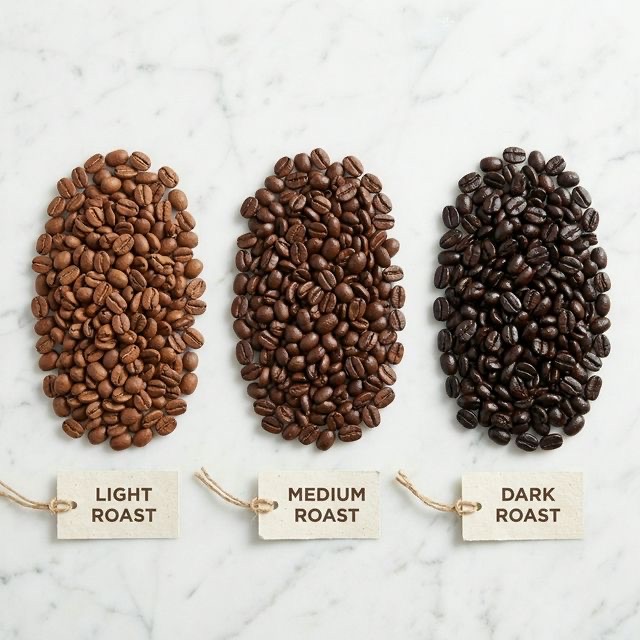
How to Create the Perfect Coffee Blend: A Practical Guide for Roasters and Wholesale Buyers
Building a great coffee blend isn’t about mixing random beans and hoping for the best. It’s about intentional design — selecting components that each serve a specific purpose in the cup, then combining them in ratios that create something greater than any single origin alone. This guide walks you through the actual process that experienced roasters use to develop blends that sell consistently and build customer loyalty.
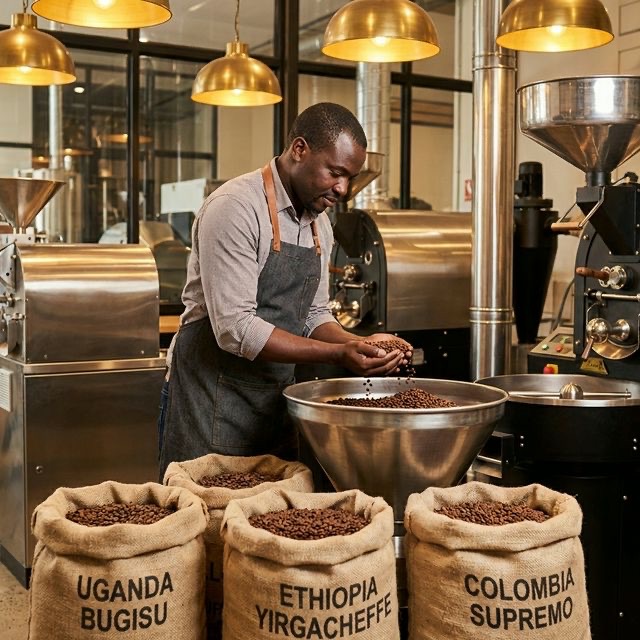
Whether you’re developing your first house blend or refining an existing espresso formula, the principles are the same. Each component needs a job, every ratio decision should be backed by cupping data, and the final product needs to remain consistent even when individual components shift between harvest seasons.
Why Blends Still Matter in a Single Origin World
Single origin coffees get the attention, but coffee blends still represent 65–75% of total wholesale coffee volume globally. And for good reason:
- Consistency: Blends can maintain a consistent flavor profile year-round by adjusting component ratios when individual origins change between crop years.
- Complexity: Well-designed blends achieve flavor depth that single origins rarely deliver — sweetness from one component, body from another, brightness from a third.
- Margin optimization: Blending allows you to combine a high-end component for flavor impact with a more affordable component for balance, optimizing your cost-per-cup ratio.
- Espresso performance: Many café clients specifically want blend consistency for their espresso menu. A house espresso that tastes different every month frustrates baristas and confuses customers.
The Three-Component Blending Framework
Most successful commercial blends follow a three-component framework. Each component serves a distinct role in the final cup:
| Role | % of Blend | What It Adds | Example Origins |
|---|---|---|---|
| Base | 40–60% | Body, sweetness, foundation | Uganda Arabica, Brazil Santos, Colombia |
| Mid (Complexity) | 25–35% | Acidity, fruit notes, complexity | Ethiopia Yirgacheffe, Kenya, Rwanda |
| Accent | 10–25% | Distinctive character, top notes | Guatemala Antigua, Uganda Natural, Sumatra |
Building the Base (40–60%)
Your base component is the foundation that everything else sits on. It should contribute body, natural sweetness, and a clean canvas for other flavors to work against. This is where Ugandan Arabica excels — the chocolate-forward, full-bodied profile from Mt. Elgon washed lots creates an ideal base that supports rather than competes with more delicate components.
For the base, look for:
- Smooth, clean cup with minimal defects
- Good body and natural sweetness
- Neutral to chocolate flavor profile
- Reliable year-to-year availability
- Competitive pricing (this is your highest-volume component)
Adding Complexity (25–35%)
Your mid component introduces the interesting stuff — acidity, fruit notes, floral aromatics. This is where you inject personality into your blend. East African coffees (Ethiopian, Kenyan, Rwandan) are classic complexity additions, bringing bright acidity and fruity notes that lift the blend beyond ordinary.
The Accent (10–25%)
The accent component adds the signature touch that makes your blend uniquely yours. It’s often a more distinctive or unusual coffee — a natural processed lot for berry notes, a Sumatra for earthy depth, or a Guatemala Antigua for smoky chocolate. Because it’s a smaller percentage, even premium-priced accent components don’t significantly impact your overall cost.
Practical Steps to Develop Your Blend
Step 1: Define Your Target Profile
Before you start cupping components, write down exactly what you want your blend coffee to taste like. Be specific:
- What acidity level? (Bright, medium, low)
- What body? (Light, medium, full, syrupy)
- What flavor family? (Chocolate/nuts, fruit/berry, caramel/sweet)
- What’s the primary brew method? (Espresso, filter, both)
- What price point are you targeting?
Step 2: Select and Cup Components Individually
Cup each potential component on its own first. Rate each for body, acidity, sweetness, flavor notes, and aftertaste. You need to understand what each coffee brings before you combine them. Document everything — blending is iterative, and you’ll need these notes when refining ratios.
Step 3: Start With Simple Two-Component Tests
Don’t jump straight to three or four components. Start with your base and one other component. Test ratios of 70/30, 60/40, and 50/50. Cup each ratio side by side. You’ll quickly learn how different proportions shift the cup profile.
Step 4: Iterate Toward Your Target
Add the third component only after you’ve optimized your base + complexity combination. Then test the accent at 10%, 15%, 20%, and 25% of the total. Each cupping session should bring you closer to your target profile.
Step 5: Stress Test for Consistency
Once you have your ideal recipe, test it under real-world conditions:
- How does it taste as espresso versus filter?
- Does it hold up with milk (for lattes and cappuccinos)?
- What happens when one component ages by 2–3 months?
- Can you swap in a similar origin if your preferred component becomes unavailable?
Espresso Blend vs. Filter Blend: Key Differences
Designing an espresso blend requires different thinking than a filter blend:
| Factor | Espresso Blend | Filter Blend |
|---|---|---|
| Body Priority | Full body essential | Medium body preferred |
| Acidity | Moderate — too high creates sour shots | Can be higher — extraction is gentler |
| Sweetness | Critical — must balance pressure extraction | Nice but less critical |
| Crema | Important visual element | Not applicable |
| Milk Compatibility | Must taste good with milk | Usually consumed black |
| Roast Level | Typically medium to medium-dark | Light to medium |
Many roasters successfully develop an “omni-roast” blend — one recipe that performs well as both espresso and filter. This simplifies your SKU count and inventory management. The key is medium roast development with enough body for espresso and enough clarity for filter.
Sourcing Components for Your Blend
The most common blend failure isn’t bad recipe design — it’s component inconsistency. When your Brazilian base lot runs out and the replacement lot tastes different, your entire blend shifts. Here’s how to manage this:
- Multi-season contracts: Lock in your core components for 2–3 seasons with a trusted supplier.
- Component redundancy: Identify backup origins that can substitute for each role. If your Uganda base isn’t available, a Brazil Santos might fill the gap.
- Pre-blend cupping: Every time you receive a new lot, cup it against your current component before using it in the blend.
- Recipe flexibility: Build 3–5% ratio flexibility into your recipe so you can adjust when components shift slightly between lots.
Common Blending Mistakes to Avoid
- Too many components: Four or five origins rarely create better results than three. Complexity becomes muddiness.
- Ignoring roast interaction: Components may need different roast profiles. Consider post-roast blending (roasting each component separately, then mixing) for maximum control.
- Chasing trends: Your house blend should reflect your brand identity, not the latest specialty trend. Consistency builds loyalty.
- Neglecting cost modeling: A beautiful blend that costs too much to produce consistently isn’t sustainable. Always model your green cost before finalizing the recipe.
- Not documenting: If you can’t reproduce your blend exactly from written instructions, you haven’t finished developing it.
Swab Dealers supplies consistent, cupping-verified Ugandan Arabica — the ideal base or accent component for your next blend. Our Mt. Elgon washed lots offer chocolate sweetness and full body that anchor any blend recipe.
Request Blend Component Samples →